
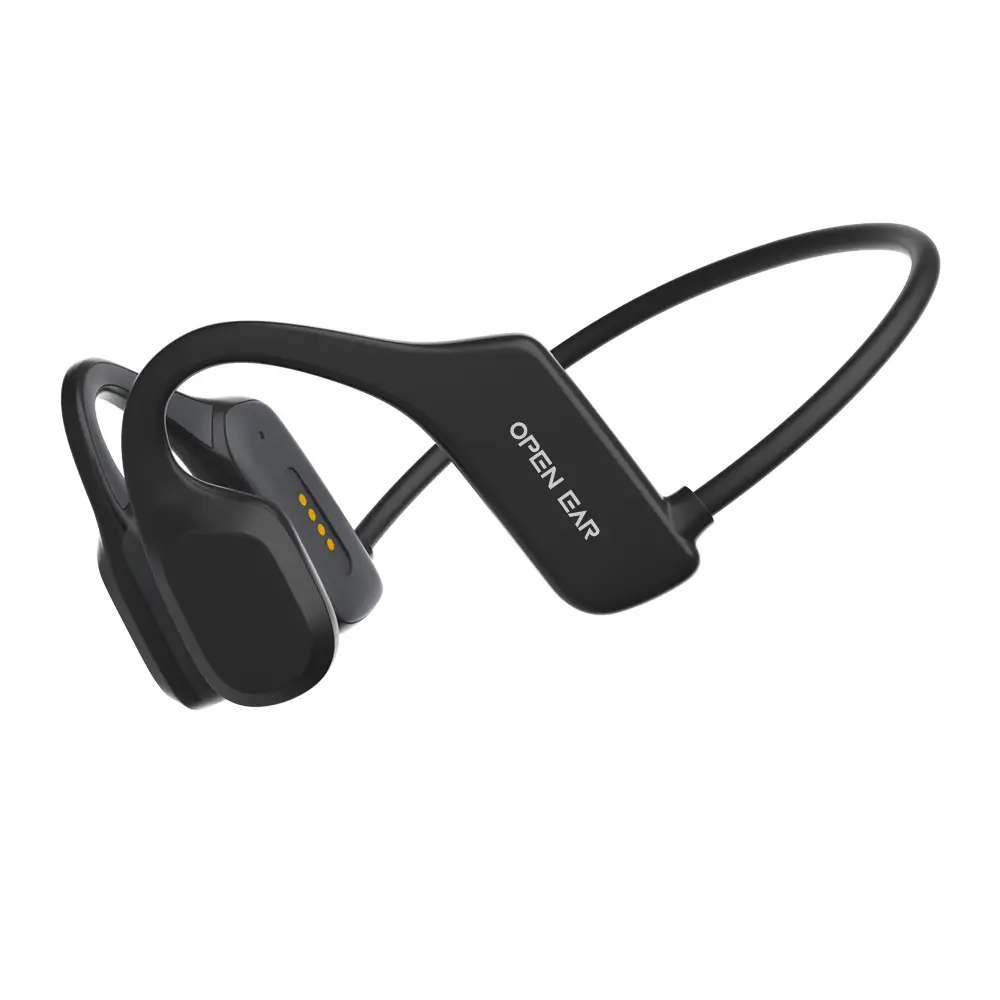
Bone Conduction Technology

Bone conduction headphones skip your eardrum entirely. Small transducers rest on your cheekbones, just in front of your ears, and send sound as vibrations straight through bone to your inner ear. Your ear canal stays completely open, no plugs, no seal, no pressure.
That open-ear design is why bone conduction headphones have become popular with runners, cyclists, and anyone training outdoors. You can hear music or a call while still hearing traffic, other people, or a coach shouting instructions. It’s also why bone conduction technology is used in some hearing aids: bypassing the eardrum means it can work for people with certain types of conductive hearing loss.
The trade-off is sound quality. Bone conduction handles voices and mid-range tones well but struggles with deep bass vibration through bone just can’t move the same air a sealed speaker can. In quiet settings, you may also notice minor sound leakage, since a small amount of vibration escapes into the air around you.
Bottom line
If situational awareness matters more than audiophile sound while running outdoors, commuting by bike, or workouts where you need to hear your surroundings, bone conduction headphones are a solid, safety-first choice.